CHANGZHOU CITY

1947: Between Postwar Chaos and Liberation

In 1947, Changzhou stood in a tense yet industrious moment. Workshops and textile mills continued to rumble along the Grand Canal, their machines echoing across narrow streets lined with low brick houses and market stalls. Coal smoke mingled with the scent of river wind as rickshaws, vendors, and factory workers threaded through the alleys, maintaining daily rhythms despite the uncertainty of civil war. Newspapers, whispered rumors, and underground leaflets circulated in tea houses and schoolyards, reflecting both anxiety and anticipation. Changzhou’s modern industries had taken root, but power still shifted between competing forces. On the eve of liberation, the city was restless—caught between the familiar pulse of production and the arrival of a new political era.

Source: Map of Changzhou City(1947) - Academia Sinica
Go to previous era
Go to next era
Layers
Town Types

Features you should notice...

army

KMT Garrison

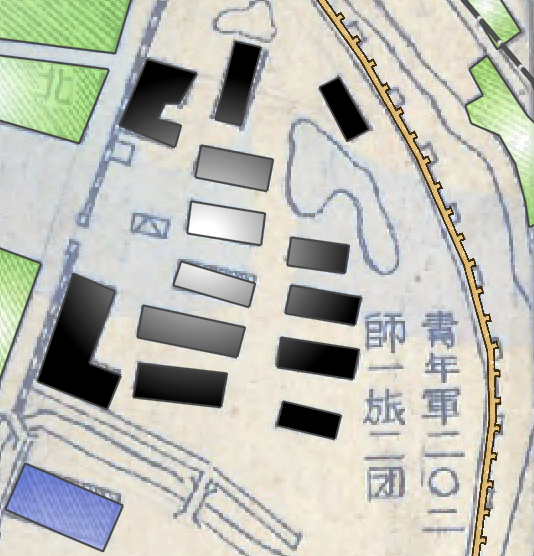
According to the Changzhou Gazetteer (1840–1985), Youth Army units in Changzhou were supported by transport, communications, and reconnaissance companies under brigade headquarters. The Youth Army was a Nationalist force mainly responsible for internal security and logistics, including troop movement, ammunition, food supply, and command coordination. This role made Changzhou an important logistical and security hub along the Shanghai–Nanjing Railway during the Chinese Civil War. As a result, military camps were placed near the city walls and the railway station for the army to protect key infrastructure and maintain control of the city.

plant

Textile Industry

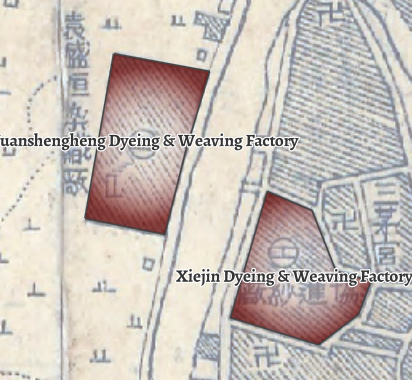
Changzhou has long been a major hub for silk and textile industries. By the Ming Dynasty, hand-operated wooden looms were well-developed, and weaving and dyeing industries were already taking shape. Leading up to the Sino-Japanese War, the textile industry, with over 40 factories, drove the city's economic growth. However, during the Japanese occupation, most factories were destroyed, and production came to a halt for three years, leaving only a few small factories to operate. This explains the sparse distribution of dyeing and weaving factories outside the city walls.

school

Schools

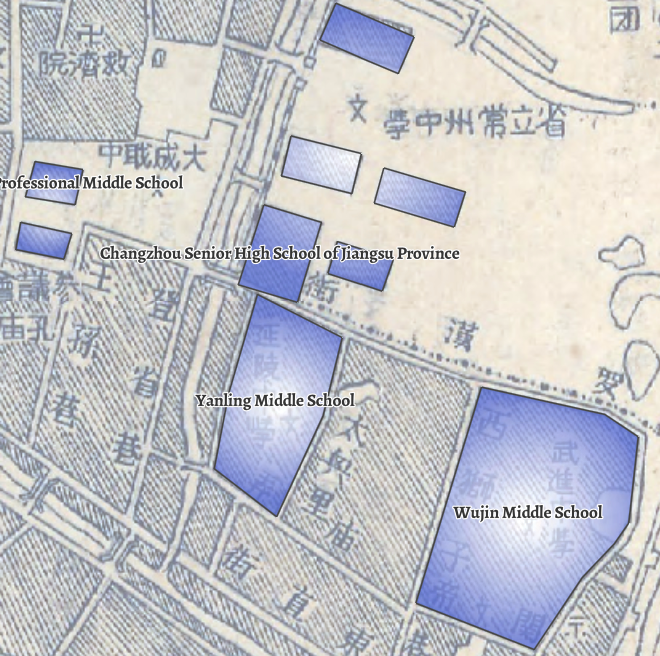
After the establishment of the Republic of China, the enthusiasm of intellectuals a dvocating for "education to save the nation," led to further progress in education between 1912 and 1936. By 1936, there were 88 schools, including elementary, middle, and vocational schools, most of which were located in the urban area. During the Second Sino-Japanese War, many schools were severely damaged or occupied as military camps, leading to the closure of many. By August 1945, only about 30 schools remained, as seen in the map with a reduced number of marked schools.

Stadium

Public Stadium

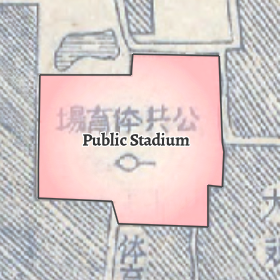
In 1918, the Wujin County government built Changzhou's first public sports stadium with a 217-meter track for local activities and gatherings. In 1937, the Japanese took over the stadium, using it as a military camp and stopping public events. After Changzhou was freed in 1949, the city was in ruins. A year later, over 3,000 soldiers and civilians rebuilt the stadium in just 20 days. The "Old Stadium" became a key place for sports events and parades during important festivals, where people from all walks of life marched, and thousands of spectators lined the streets to watch.